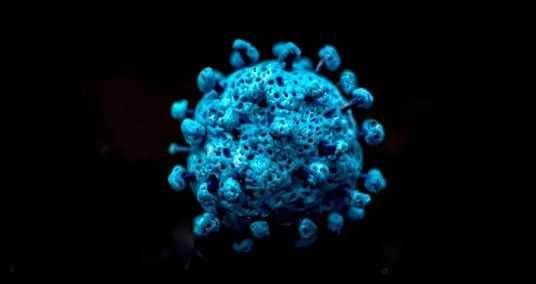
A heavily mutated variant of the virus that causes Covid-19 appears to be affecting primarily children, scientists say, though it’s not causing more severe disease – in kids or in adults.
Rather, experts say the fact that the virus is breaking with its pattern of being a menace, primarily, of older adults is a telling detail. It’s something to study and understand so that scientists can better predict the behavior of this ever-evolving virus.
Although Covid-19 is circulating at a very low level right now, the US is just starting to contend with this sleeper branch of the Omicron family tree, a variant called BA.3.2, which has been nicknamed “Cicada,” after the insect’s ability to disappear and then reemerge after years underground.
This variant has been spotted in 23 countries and in wastewater from 25 US states, according to the US Centers for Disease Control and Prevention, which quietly published a report on the virus last month. It appears to be circulating in the US at low levels, although testing has been scaled back since the height of the pandemic, so it may be more widespread than currently known.
Current vaccines are still believed to offer some protection, and scientists say that the new variant is so “meh” in terms of the trouble it’s been causing that it’s not even clear whether we need to update the shots to better protect against it.
“It’s super interesting from a viral evolution standpoint,” said Dr. Alex Greninger, head of the Division of Infectious Disease Diagnostics at the University of Washington’s Department of Laboratory Medicine. He noted that for a variant that first appeared in November 2024, it’s certainly taking its time to make a move, and it may end up having very little real-world impact.
“That’s been about a year and a half that this thing has had to run its course or to increase,” Greninger said, and it hasn’t done very much. “It’s not a nothingburger, but it’s like adding grilled onions to your burger.”
Other experts agreed.
“I don’t believe that it should be included in the next vaccine,” said Dr. Tulio de Oliveira, who directs the Center for Epidemic Response and Innovation, which is affiliated with Stellenbosch University in South Africa. That nation has led the world in identifying new Omicron variants, including this one.
“At the moment, with previous immunity and previous vaccination, we’re not seeing any sign of increasing hospitalization and death” – and besides that, Oliveira said, it doesn’t seem like the public has a big appetite for a new vaccination campaign.
It’s more important, he thinks, to keep an eye on it and make sure it doesn’t change in ways that would cause it to be a problem.
Cicada’s disappearing routine
Scientists who hunt for unusual Covid-19 variants waited to give this one a colloquial, or common, name.
“It has to look like it will take off or will be of wider interest … or else we don’t see a nickname as being useful,” said Dr. T. Ryan Gregory, an evolutionary biologist at the University of Guelph in Canada.
He and a group of fellow variant-hunters started discussing names for BA.3.2 around the time the World Health Organization designated it a “variant under monitoring” in December. The same group has given previous notable variants the names of mythological creatures (Cerberus, Kraken), constellations (Eris) and even types of clouds (Stratus, Nimbus).
“Cicada” seemed to be the right fit for this one because it has done the same kind of disappearing routine.
When Omicron swept the globe in late 2021, genetic testing picked up five primary branches of its family tree. Four of those branches have since driven waves of infections around the world. But one, dubbed BA.3, was an exception. It was first detected in 2022 but then mysteriously went silent.
Scientists think that for two years, BA.3 infected a single person who didn’t have enough immune function to completely fight it off, Gregory said. These kinds of chronic infections are a prolonged war between the virus and the immune system, in which the body exerts pressure on the virus that makes it constantly change. In some cases, after a long-term infection, the virus is able to re-emerge and begin to circulate again, as seems to have happened in this case.

In November 2024, BA.3.2 popped up in a nose swab of a 5-year-old boy in South Africa, and it looked very different than its parent virus.
Normally, new offshoots of variants may have a handful of gene changes compared with the virus they evolved from. BA.3.2 has 53 changes to its spike – the part that docks onto cells – compared with BA.3 and roughly 70 mutations compared with the original coronavirus that emerged in 2019.
It was first picked up in the US last summer, in a traveler from the Netherlands. In January, the first clinical sample from a sick patient turned out to be BA.3.2.
Its numerous changes might help it slip past the immunity created by past infections and vaccination, but unlike other highly mutated variants of SARS-CoV-2, this one hasn’t shown any signs of global dominance.
Somewhere along the way, BA.3.2 lost its ability to bind tightly to ACE-2 receptors on cells, the doorways the virus needs to go through to cause infections. That means it has been a middling competitor on the global scene and hasn’t driven new waves of disease.
BA.3.2 doesn’t even currently show up in the national picture, though it is picking up steam, according to Dr. Marc Johnson, a professor of molecular microbiology and immunology at the University of Missouri School of Medicine who closely tracks the presence of the virus in wastewater.
“I think there is a very good chance BA.3.2 will become the dominant variant, but it certainly isn’t a sweeping variant like many we’ve seen before,” Johnson said. “I think if BA.3.2 were a mutation away from being a more aggressive variant, it would have found it by now.”
In Germany, where BA.3.2 has accounted for an estimated 30% of all new Covid-19 infections from November through January, it’s now showing signs of decline, said Dr. Florian Krammer, a virologist and professor of vaccinology at Mount Sinai’s Icahn School of Medicine in New York.
“Germany had a lot of cases, and it looked like it’s going up and dominating, but it has kind of stalled, and I think it’s actually going down a little bit,” he said.
Krammer and his team published a study looking at how well Covid-19 vaccines that were updated for the winter of 2024-25 to specifically target the KP.2 strain, another Omicron descendant, performed against a number of emerging variants, including BA.3.2. Although vaccine-created antibodies didn’t snuff out some variants, they seemed to take care of BA.3.2 pretty quickly.
“Our results may explain why this variant has not achieved high transmission rates globally,” the study authors wrote.
Infecting kids ‘quite efficiently’
A lack of genetic sequencing of Covid-19 viruses makes it difficult to interpret patterns in spread. But one interesting thing has leapt out of the data: This variant seems to be better at infecting kids than adults.
“One thing that we found is that the BA.3.2 seems to infect children – not infants but children between 3 and 15 years old – quite efficiently, which we do not know why yet,” said Oliveira, from South Africa.
An analysis of data from New York City, from variant sleuth Ryan Hisner, shows that kids are about five times more likely to be infected by BA.3.2 compared with other variants, although BA.3.2 still represents a minority of variants in the mix there.
There are a number of theories about why. Oliveira said he believes that BA.3.2 is better at infecting kids because their immune protection from vaccines and past infections wanes more quickly than that of adults.
Hisner said he thinks it may have something to do with missing parts of the virus’ genome. BA.3.2 viruses are lacking parts of specific genes that play a role in activating the immune system. One other variant, XBB, was also missing these same parts of its genome, Hisner said, and it too showed up more often than other variants in kids.
Greninger, at the University of Washington, said it may also have something to do with the number of exposures to Covid-19 that kids have had.
Each vaccine and each infection helps diversify a person’s immune response so they’re better equipped to take on the next variant of the same virus – no matter how different it looks.
“Immune histories kind of hedge against viral evolution a little bit better,” he said. Kids just don’t have much of an immune history as adults, so their toolbox is more limited when they have to deal with it the next time.
Greninger also points out that kids are at another disadvantage, especially if they’re in school or day care: They are surrounded by germs all the time, so they are easy marks.
He says the idea that one Covid-19 variant might be better at infecting kids just means it’s behaving like any other respiratory virus, such as the flu, which classically spreads from school-age children to their parents and grandparents each season.
For more CNN news and newsletters create an account at CNN.com
latest_posts
- 1
 The Most Compelling Innovation Developments Somewhat recently
 - 2Was This Driver Simply Having Some good times Or Behaving Like An Ass?
- 3Accor signs agreement to transform El Gouna resort as Sofitel
- 4The 10 Most Persuasive Forerunners in Innovation
- 5Geminid meteors streak under green sky | Space photo of the day for Dec. 19, 2025





- Old photos misrepresented as aftermath of political party supporters' brawl in Bangladesh
- Key Caper d: A Survey of \Procedure and Tomfoolery Released\ Tabletop game
- New Gaza militia declares war on Hamas: 'Your dirty shoes are more honorable'
- JFK's granddaughter reveals terminal cancer diagnosis, criticizes cousin RFK Jr.
- Top 10 Arising Advances That Will Shape What's in store
- Vote in favor of your Favored kind of craftsmanship
- Yasser Abu Shabab's killing raises questions about Israel's militia strategy in Gaza
- No more attempts to free whale stranded off Germany, officials say
- How will the universe end?